
Book an Appointment

Fill out this simple form and we’ll call you right back.

Ayurvedic Treatment for Hair Fall & Alopecia: Rooting for Regrowth

Hair loss is a sign of a deficiency in internal nourishment. Our exclusive Ayurvedic treatment for hair loss and alopecia therapy focuses on resolving the root cause rather than just symptoms. Achieve a healthier scalp and regrow strong, thick hair in a natural way through our herbal courses.

100% Confidential

Discreet Packaging

Safe Herbal Cure

Non-Habit Forming

Book Your Ayurvedic Consultation for Hair Regrowth

This information is for general awareness only; consult our expert doctors online to know the exact causes of hair fall and get personalized Ayurvedic treatment according to your nature.

What is Hair Fall? Understanding Alopecia Areata

It is perfectly normal to lose 50, 100 strands a day, but after that, the hair loss becomes a matter of clinical concern if it continues to exceed the amount of regrowth. Whatever type of problem causing the hair fall, i.e. stress, related shedding or autoimmune patchiness, our Ayurvedic treatment for hair loss is capable of being identified first and then treated effectively.

Common Types We Treat:

  • Telogen Effluvium (Stress Shedding):This is a sudden, wide, spread shedding caused by stress, illness (such as typhoid/COVID), or nutritional deficiency in which the hair prematurely gets into the “resting phase”.
  • Alopecia Areata (Indralupta): This is an auto, immune disorder in which the body attacks the hair follicles resulting in the loss of hair in the form of smooth, round patches. Ayurvedic treatment for alopecia areata mainly involves working on clearing the blocked channels (Srotas) and thus restarting the growth.
  • Androgenic Alopecia: It is a hereditary male or female pattern of baldness caused by sensitivity to DHT hormones.

The Ayurvedic Perspective: (Khalitya)

According to Ayurveda, hair (Kesha) is a result of Bone Tissue (Asthi Dhatu). Thus, if your bones are weak or there is a problem with the calcium metabolism, your hair will be affected first. We also consider your Doshas:

  • Pitta (The Burner): Heat overload is carried to the scalp, literally “burning” the follicles, thus, leading to premature greying and thinning.
  • Vata (The Drier): Results in dryness, hair ends getting split, and weakening of hair roots making them easy to break.
  • Kapha (The Blocker): An excess of oil and sebum ends up clogging the follicles, thus, no new growth.

Causes of Hair Fall & Loss: Why It Happens

Why do our hair get lost so fast compared to our ancestors? It is certainly not only a matter of bad luck. From lacking of nutrients to modern stress, pinpointing the main causes of hair fall is a prerequisite of any effective ayurvedic treatment for hair loss.

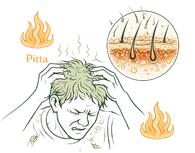
Excess Pitta dosha and scalp inflammation causing hair thinning and hair fall.
Physical Causes

Iron Deficiency (Anemia) tops the list of women hair fall causes by effectively depriving hair follicles of oxygen. Low Protein results in hair losing its inner strength (Keratin), on the other hand, Poor Gut Health situation prevents nutrients from reaching your Asthi Dhatu (Bone Tissue).
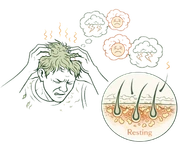
Mental stress and emotional anxiety leading to hair thinning and the resting phase of hair follicles.
Psychological Causes

Exposure to stress of a long duration disorients the normal cycle of growth. Very deep emotional tension results in follicles rapidly switching from the "active phase" to the "resting phase, " and thus, transitioning into shedding pattern, which comes out so suddenly and in the form of patches, that it is called Telogen Effluvium.
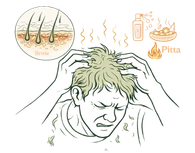
Impact of chemical products, spicy food, and Pitta aggravation on brittle hair and hair fall.
Lifestyle Causes

The external environment can be instrumental in the breakdown of the hair shaft. When you wash your hair with hard water (containing a lot of salts/chlorine) and overdo the heat styling (blow, drying/straightening), the hair cuticle is so fried that the hair starts breaking and getting thinner.
Symptoms of Hair Loss & Alopecia Areata to Watch For

Hair loss is often accompanied by facial changes before the baldness is quite clear. It is vital to catch the early symptoms of hair loss and alopecia areata as this can help getting the hair follicles rescued in time, before they are dead for good.

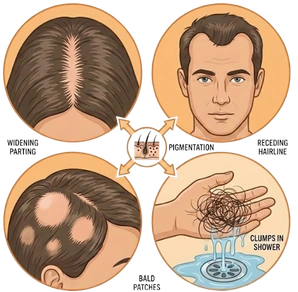
Signs of hair loss including widening part, receding hairline, bald patches, and hair clumps in shower.
  • Growing Parting: A parting line that becomes more and more visible through the scalp is a specific indication of hair fall.
  • Hairline Recession: M, shaped recession in men or thinning temples in women are the signs of genetic progression.
  • Hairless Spots (Alopecia): These are hairs that have fallen out leaving smooth, hairless, round spots about the size of a coin which are the clear signs of alopecia areata that should be treated immediately.
  • Hair falling by the handful in the shower: When you are washing or combing your hair and you see that you have lost a couple of handfuls, it means that you are suffering from acute, active shedding.

Common Myths About Hair Fall & Regrowth

✖ MYTH ✔ FACT
"Shaving your head makes hair grow back thicker." No, false. Shaving cuts only the hair shaft which is the part that is already dead. It doesn't have any impact on the living follicle which is deep inside the scalp. The new hair just feels "stubbly" due to the blunt tip, not that it is actually thicker.
"Shampooing daily causes hair fall." Please don't blame the washing itself as it cleans the scalp. The hair you see in the drain has already been separated from the scalp and is ready to fall out. On the other hand, using shampoos with harsh sulfates every day can lead to damage of the cuticle layer.
"Wearing caps/hats causes baldness." Hats do not "suffocate" hair roots. They only cause damage if they are extremely tight, leading to Traction Alopecia by physically pulling on the roots over time.
"Oiling overnight is best for everyone." In Ayurveda, this depends on your Dosha. If you have Sinusitis or Kapha imbalance, leaving oil overnight can increase mucus and congestion. For many, leaving oil for just 1-2 hours is sufficient for nourishment.

Risks of Ignoring Hair Loss: Permanent Damage & Alopecia Complications

Hair fall can be a “silent alarm” that warns us about our health. Not only do you risk your hair falling out if you choose to ignore the early signs, but you also risk permanent scarring and missing out on the right diagnosis. It is important to know the risk factors of hair loss for timely treatment.

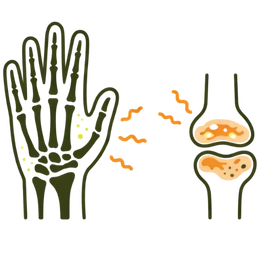
Illustration of joint inflammation and bone health risks like psoriatic arthritis.
Permanent Follicle Death

If care is postponed, the follicles will get scarred and hence any future hair regrowth will be impossible without surgery.
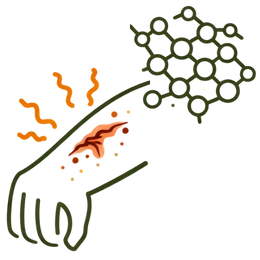
Risk of bacterial secondary infections and skin barrier damage due to untreated eczema and psoriasis.
Psychological Distress

Extreme hair loss can be such a devastation that it leads to profound social withdrawal, anxiety, and body dysmorphia in many patients.
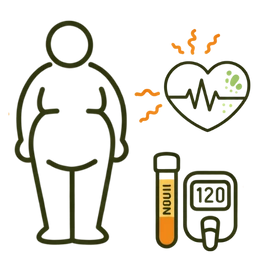
Link between chronic skin inflammation and metabolic syndrome, obesity, and heart health.
Underlying Disease

Hair loss if not controlled can be the sign of serious diseases like Thyroid, Lupus, or PCOD.
Potent Ayurvedic Herbs for Hair Growth & Regrowth Treatments

Our scalp is revived by the powerful herbs of Keshya, which are made into medicated oils and internal medicines. We use these age, old herbal remedies to stop hair loss and awaken the follicles that have gone to sleep in our ayurvedic treatment for hair loss. 

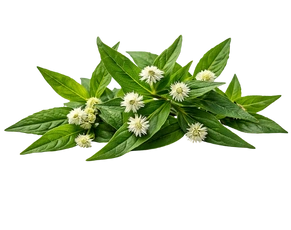
Fresh Bhringraj leaves and flowers, the primary Ayurvedic herb for treating hair fall and alopecia.

Bhringraj (Eclipta alba)

It is said that "Keshraj" i.e. Bhringraj, not only activates the hair follicles but also reverses the process of DHT which is the main cause of hair miniaturization. It is an extremely cooling herb and, therefore, a great ayurvedic hair fall control remedy.
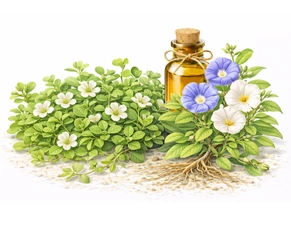
Brahmi and Shankhpushpi Ayurvedic Herbs for Stress Hair Loss

Brahmi (Bacopa monnieri)

It helps in the prevention of hair loss which is caused by stress. The scalp is rendered cool and the weak roots are fortified through the application of Brahmi.
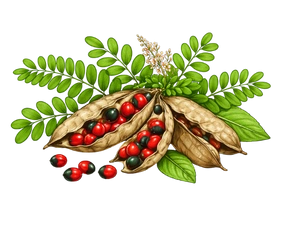
Gunja (Abrus precatorius) seeds and leaves used in Ayurvedic therapy for patchy hair loss and alopecia areata.

Gunja (Abrus precatorius)

Specifically used for Alopecia Areata. The paste of Gunja seeds stimulates the scalp intensely to trigger growth in smooth patches (Strictly under medical supervision).
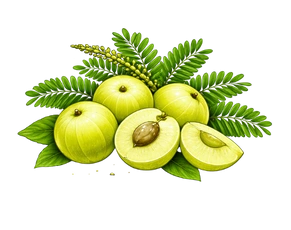
Amalaki (Indian Gooseberry)

The highest concentration of antioxidants can be found in the fruit of this tree. It is said that Amalaki prevents premature greying (Palitya) and by the hair shaft strengthening it through the increased production of natural collagen.
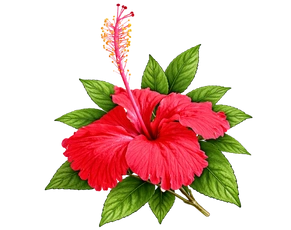
Red Hibiscus flower and leaves used in Ayurvedic hair treatments to stimulate regrowth.

Hibiscus (Japa)

The flowers contain mucilage that conditions hair deep down and stimulates regrowth in bald patches.
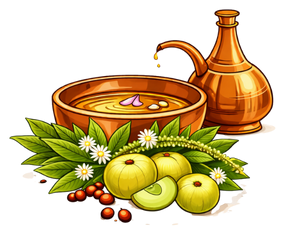
Ayurvedic Nasya therapy with Anu Tailam and Amla for preventing hair fall and promoting regrowth.

Nasya Therapy (Anu Tailam)

Since the "Nose is the doorway to the Brain," instilling medicated drops (Nasya) stimulates the brain centers responsible for hormonal balance and hair growth.
Yoga for Hair Growth & Alopecia: Boost Scalp Circulation

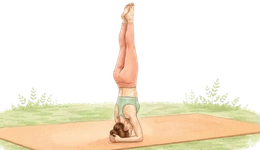
Hair follicles need oxygen, rich blood in order to stay alive. The key to this is inversions. Performing targeted yoga for hair growth helps blood get to the head (Urdhwa Rakta Sanchara), thereby providing the roots with nutrients and alleviating stress, caused triggers.

Sirsasana (Headstand)

By the “King of Asanas” scalp is flooded with nutrient, rich blood to start the process of hair regrowth.

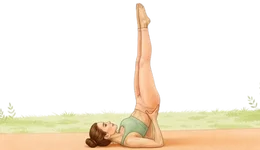
Sarvangasana (Shoulder Stand)

Professional illustration of a person performing Sarvangasana (Shoulder Stand), a vital inversion in Yoga & Pranayama: Natural Ways to Boost Fertility.
Supplies the thyroid gland with nutrients to regulate hormones that play a key role in hair loss prevention.

Balayam (Rubbing Nails)

Illustration of a woman practicing Balayam Yoga by rubbing nails to stimulate hair regrowth and prevent hair fall.
The nail rubbing releases nerve endings that are very close to the ones leading to quick scalp rejuvenation.

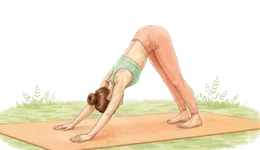
Adho Mukha Svanasana (Downward Dog)

Woman practicing Adho Mukha Svanasana or Downward Facing Dog pose to improve blood flow to the scalp and reduce hair loss.
Improves blood flow to the head and at the same time reduces cortisol and stress hair fall.

Ayurvedic Diet for Hair Growth & Healthy Lifestyle Habits

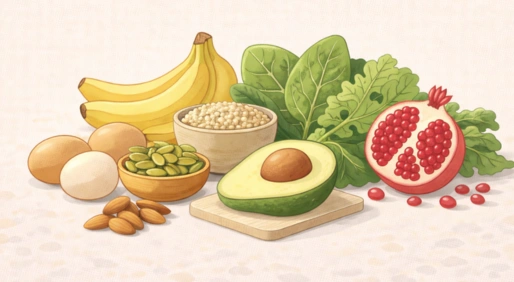
As hair is a derivative of bone tissue, it is necessary to “feed” your bones if you want to regrow your hair. We at our ayurvedic diet for hair growth have focused our attention on protein, iron, and certain “Keshya” foods that help the follicle get nourishment from the inside.

A variety of nutritious foods including bananas, spinach, pomegranate, avocado, and eggs representing the Ayurvedic diet for permanent recovery from erectile dysfunction.

The "Keshya" Diet

Iron & Protein

Spinach, lentils, eggs, and seeds are essential building blocks for strong keratin.

Curry Leaves

Chew 3-4 raw curry leaves daily; they are rich in beta-carotene and prevent graying.

Sesame & Coconut

These healthy fats directly provide nutrients to the Asthi Dhatu (Bones) to strengthen hair roots.

Avoid

Stop consuming too much salt, spicy pickles, and vinegar, as these will increase the Pitta heat and hair fall will be the first effect.

Lifestyle Changes

Water Temperature

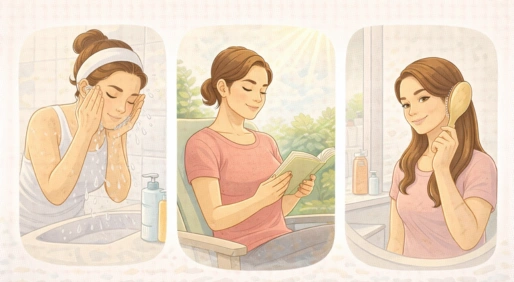
Never wash hair with hot water. Lukewarm or cool water prevents root damage.

Comb Gently

Wet hair is the most fragile. To avoid hair breakage use a wide, toothed wooden comb.

Get Rid of Dandruff

When the roots are blocked by a fungal infection, it will worsen your hair situation. Neem water rinses are an excellent hair fall control remedy if you go the natural ayurvedic route.

Manage Dandruff

Fungal infections block roots. Use Neem water rinses as a natural ayurvedic remedy for hair fall control.

When to Book an Online Consultation for Hair Loss?

Hair loss is sometimes a sign of serious internal health problems. If you detect these particular signs of trouble, you shouldn’t rely on home remedies. To avoid irreversible damage, you must see an Ayurvedic hair fall doctor without delay.

  • The quick manifestation of well, defined, circular bald spots is typical of an autoimmune condition known as Alopecia Areata.
  • Signs of scalp inflammation include persistent redness, scaling, or pain which are a signal of a fungal infection or psoriasis.
  • Post, menopausal women with thinning hair along the center of the scalp should consider the possibility of female pattern hair loss (androgenetic alopecia) due to hereditary factors.
  • It can be a sign of harsh, advancing autoimmune alopecia when one loses eyebrows or eyelashes.

Key Benefits of Ayurvedic Treatment for Hair Loss & Regrowth

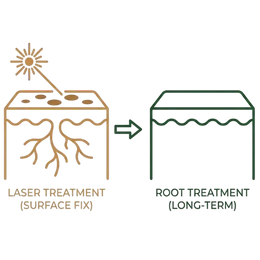
Unlike mere surface solutions, our comprehensive method goes deep to the very source of hair shedding. Our ayurvedic treatment for hair loss not only nourishes the scalp and lowers stress levels but also guarantees a renouement of hair growth and a glossy, healthy hair texture over time.

Infographic comparing laser treatment surface fix with Ayurvedic long term root treatment for hair regrowth.

New Growth

Awakens the sleeping hair follicles to initiate a steady new hair growth naturally.
Icon showing a person finding relief from scalp itching and inflammation through Ayurvedic hair treatment.

Improved Texture

Brings back the natural gloss thus resulting in hair that is thicker, darker, and shiny.
Icon representing healthy hair follicles and scalp rejuvenation through Ayurvedic hair loss treatment.

Scalp Health

Helps to get rid of dandruff and itching by thoroughly cleansing the scalp environment.
Icon representing mental stress relief and scalp relaxation through Ayurvedic hair fall therapy.

Stress Relief

Herbal like Brahmi facilitate a good night sleep thereby reducing the stress related hair loss.

Ayurveda vs. Minoxidil & Transplants: Which Path is Right for You?

Modern treatments may give you a rapid result, but the price is usually a lifetime dependence or surgical risks. Our Ayurvedic treatment for hair loss aims at providing internal nourishment mainly for lasting results.We pit our natural method against Minoxidil and Hair Transplants so you can make an informed choice.

Feature Ayurvedic Treatment (AshwaKaya) Minoxidil / Transplants
Method Internal Nourishment & Natural Oils Vasodilator Chemical / Surgery
Sustainability Lasting results with lifestyle Hair often falls if Minoxidil is stopped
Side Effects Cooling, stress relief Scalp dryness, unwanted facial hair
Root Cause Treats Diet, Stress, Digestion Treats the symptom (Scalp flow)
Cost Affordable & Holistic Expensive & Invasive

Rooting for Your Confidence & Sustainable Regrowth

True hair regrowth is a marathon, not a sprint. While visible changes take time, our Ayurvedic treatment for hair loss ensures success by cooling internal heat and nourishing the bone tissue to stop the “fall” permanently.

Book an Appointment

Fill out this simple form and we’ll call you right back.

Why Choose AshwaKaya for Ayurvedic Hair Loss Treatment?

Most clinics only treat the scalp, we on the other hand, treat the system. Our unique ayurvedic hair loss treatment is based on an ancient concept according to which hair is a derivative of bone tissue. Thus, it ensures deep, structural repair rather than just surface, level care.

Two professional Ayurvedic doctors standing with cross-armed confidence, surrounded by symbols of holistic health and natural herbs, representing Why Choose AshwaKaya.
  • Bone-Hair Connection: We treat the Asthi Dhatu (bone tissue) and calcium metabolism alongside the scalp, as strong bones are the prerequisite for strong hair.
  • Customized Oils: We never use generic oils. We prescribe specific cooling oils for Pitta types (to stop burning) and warming oils for Vata types (to fix dryness).
  • Nasya Therapy: We include Nasya (nasal administration) to clear head channels and stimulate the brain centers responsible for hormonal balance.
  • Stress Management: We actively treat the stress and anxiety that are often the "silent killers" of hair follicles, ensuring your recovery is holistic.

Frequently Asked Questions about Ayurvedic Hair Loss Treatment

If the follicles are dead (leading to a smooth, shiny scalp), no medicine can bring them back to life. On the other hand, if the follicles are only inactive (hair thinning is still ok), hair loss Ayurvedic treatment can greatly slow down the hair loss process and even strengthen the remaining hair follicles for better coverage.

Usually, 2, 3 times a week is considered perfect for most people. Spread the oil and keep it on for no more than 1, 2 hours before you wash it off. It is generally not recommended to leave oil on your hair for days since it collects the dust and traps heat, which results in dandruff and closed pores, most of the time.

Definitely. If you undergo prolonged stress, it will forcibly take a great number of hair follicles into the Telogen (shedding) phase prematurely. We use adaptogenic herbs such as Ashwagandha to fight cortisol levels and, thus, stop stress, induced hair loss in our treatment regimen.

Yes. The excessive use of hard water can result in hair damage. The chemical elements found in hard water (calcium and magnesium) form a layer on the hair shaft that makes the hair dry and break easier. Washing your hair one more time with filtered water or get a water softener is strongly suggested to save your cuticles.

There is no single “best” oil; it depends on your Dosha. Generally, Bhringraj is excellent for everyone. Brahmi is best for stress-related fall, while Coconut oil is ideal for cooling Pitta heat. We prescribe specific medicated oils based on your unique body type.