
Book an Appointment

Fill out this simple form and we’ll call you right back.

Joint Pain Ayurvedic Treatment for Arthritis & Knee Stiffness

Are you experiencing chronic stiffness? Our Ayurvedic treatment for joint pain is specially made to focus on the main cause of inflammation and Ama (toxins). If you want Ayurvedic treatment for knee pain, osteoarthritis or general mobility problems, we offer a completely natural solution. Stop the swelling and pain with no use of harmful painkillers.

100% Confidential

Discreet Packaging

Safe Herbal Cure

Non-Habit Forming

Book Your Online Consultation for Joint Pain

This information is for general awareness only; Consult our expert doctors online for accurate diagnosis and personalized Ayurvedic treatment of Joint Pain and Arthritis.

Understanding Arthritis Osteoarthritis vs. Rheumatoid Arthritis

“Arthritis” is a collective term for more than a hundred different disorders. To give you the right herbal treatment for joint pain, we first find out if your pain is unkind to the bones (mechanical, “Wear and Tear”) or if it comes from the immune system attacking your body (inflammatory, “Autoimmune”).

The 3 Main Types We Help:

  1. Osteoarthritis (OA) The “Wear and Tear” Disease: Some people call it Sandhivata in Ayurveda. Cartilage gets thin due to different causes. At the beginning of the disease, cartilage is damaged and the joint suffers from the loss of the cushioning cartilage. Clinical manifestations that lead patients to search for ayurvedic treatment of osteoarthritis and knee pain.

    Symptoms: Sound of creaking (Crepitus), stiffness, and pain that gets worse with activity. In this case, the weight, bearing joints, such as knees and hips, are usually affected.

  2. Rheumatoid Arthritis (RA) The “Autoimmune” Disease: We call it Amavata. Amavata is a situation where the human body’s immune system attacks the person’s own tissues (synovium), resulting in severe inflammation.

    Symptoms: There is swelling, redness, heat, and pain that is most intense in the morning but after some movements it becomes less. Small joints (fingers/wrists) in a symmetrical manner are the ones that are mostly affected.

  3. Gout (Vatarakta): It is a disorder of metabolism which one of the most prominent symptoms is severe pain accompanied with redness and swelling often at the big toe which is caused by the deposition of uric acid crystals in the joints.

Ayurvedic Perspective: Sandhivata (Dryness) vs. Amavata (Toxins)

In Ayurveda, joint pain is not a single disease. It stems from two opposite causes: Dryness (Vata) or Toxins (Ama). Identifying the correct root cause is critical because the Ayurvedic treatment for osteoarthritis (Oil Massage) can actually worsen Rheumatoid Arthritis. We customize your joint pain treatment based on this diagnosis.

The Two distinct Mechanisms:

  • Sandhivata (Osteoarthritis) – The “Dry” Joint:

    Vata Aggravation: Excessive Vata (Air element) accumulates in the joints, drying up the natural lubricating fluid known as Shleshaka Kapha.
    Friction & Pain: Without lubrication, the bones rub against each other, causing the characteristic creaking sounds and sharp pain associated with knee osteoarthritis.
    The Cure: Requires Snehana (Oleation)—applying warm medicated oils to nourish and re-lubricate the joint.

  • Amavata (Rheumatoid Arthritis) – The “Toxic” Joint:

    Ama Accumulation:
    Undigested food turns into sticky toxins (Ama). These toxins travel through circulation and “clog” the joint spaces.
    Swelling & Heaviness: This creates deep inflammation, heaviness, and often fever. It is a condition of Ama + Vata.
    The Cure: Requires Langhana (Detox/Fasting) to burn the toxins. Important: Oil massage is often forbidden initially in this stage as it “feeds” the blockage and makes the stiffness worse.

Root Causes of Joint Pain in Knees: Physical, Mental & Lifestyle Triggers

Why are joints degenerating faster today? It isn’t just aging. Specific modern habits disrupt the body’s balance, accelerating the risk factors of joint pain by either drying out the lubrication or clogging the joints with toxins.

Physical Causes of Joint Pain and Knee Arthritis
Physical Causes

Imbalanced Vata Dosha (Wind) is the main reason for the drying up of one of the most important lubricating fluid Shleshaka Kapha. This lack of moisture results in severe friction between bones and thus constitutes the major cause of knee osteoarthritis and the occurrence of excruciating pain on moving.
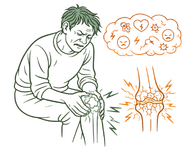
Illustration showing the link between mental stress, anxiety, and increased knee pain sensitivity in arthritis patients.
Psychological Causes

When you have constant anxiety, it can make your body more sensitive to pain. This never, ending mental stress directly disturbs Vata, which due to muscle stiffness aggravates pain on a daily basis and is a major cause of joint pain that gets overlooked very often.
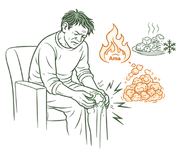
Illustration showing how poor diet and cold food lead to Ama toxins and joint inflammation in the knees.
Lifestyle Causes

Lack of physical activity along with consumption of cold, dry foods deteriorates digestive fire (Agni). As a result, sticky toxins (Ama) are formed which accumulate in the joints, leading to deep inflammation and causing a great restriction of mobility.
Symptoms of Joint Pain: Listening to Your Joints

Your joints speak to you long before they fail. Identifying specific symptoms of joint pain early is crucial because “Morning Stiffness” requires a completely different treatment than “Clicking Knees.” Here is how to interpret your body’s signals.

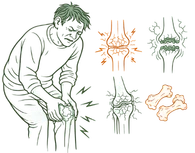
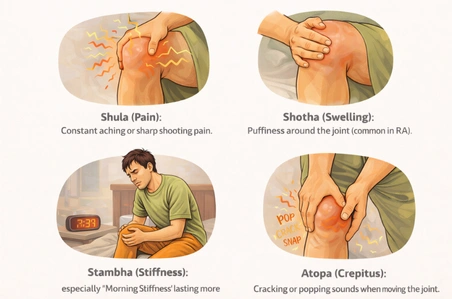
Infographic showing symptoms of arthritis including sharp pain, joint swelling, morning stiffness, and popping sounds in knees.
  • Shula (Pain): Whether it is a constant dull ache or sharp shooting pain, this is the primary sign of Vata aggravation in the bone tissue (Asthi Dhatu).
  • Shotha (Swelling): The appearance of puffiness or redness around the joint is one of the most commonly heard symptoms in Rheumatoid Arthritis (RA). It is fluid retention that is happening as the joint is swelling due to active inflammation caused by toxins (Ama).
  • Stambha (Stiffness): The hallmark sign of autoimmune arthritis is severe "Morning Stiffness" where the feeling of stiffness lasts for more than 30 minutes. It means that toxins have "frozen" the joint during the night.
  • Atopa (Crepitus): Do your knees make clicking noises when you move? These cracking or popping noises (Crepitus) are when the lubrication is not enough. It is the main sign of Osteoarthritis.

Common Myths About Knee Pain & Arthritis

✖ MYTH ✔ FACT
Joint pain is just a part of aging. No. Pain is not something that happens to everyone. As we age our tissues get affected, however, properly lubricated joints (Rasayana) can keep you running smoothly and pain-free even at 80+.
Calcium pills cure arthritis. No. Calcium only makes the bone stronger but arthritis problem lies in the cartilage and lubrication. To become flexible again you need Ghee, Collagen and hydration, not just calcium.
Don't exercise if it hurts. No. Complete rest will only make your joints more stiff. Continuous, low impact exercises to your joints is a must that will help to have more fluid that acts as a lubricant and, hence, will lessen your stiffness.
Curd is good for calcium. No. As per Ayurveda, Curd (Dahi) is Abhishyandi (causes blockage). It aggravates inflammation and hence is considered the worst food for patients suffering from Rheumatoid Arthritis.

Risks & Complications of Untreated Joint Pain: From Deformity to Surgery

Ignoring the stiffness that keeps coming back is not just a matter ofpain endurance, it is also about the risk of losing your independence. Not treating joint pain symptoms will only speed up the deterioration process and often result in damage that is irreversible and requires surgery.

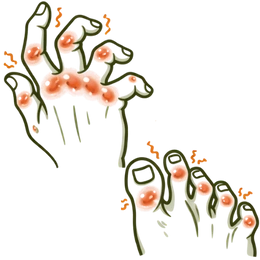
Illustration showing joint deformity in fingers and toes as a long term risk of untreated rheumatoid arthritis.
Deformity

Due to the persistent inflammation that occurs in Rheumatoid Arthritis, the fingers and toes become permanently twisted and deformed.
Icon representing the risk of long term drug dependency and organ stress from relying on painkillers for joint pain.
Drug Dependency

Painkillers taken for a long time break down the stomach lining and kidneys, leading to a dangerous drug addiction.
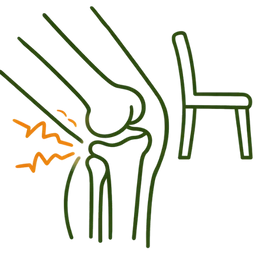
Risks of Immobility and Severe Knee Joint Stiffness
Immobility

When the knees hurt so much that they cannot be used, the only possible way of living is sitting, which will increase the chances of getting diabetes, obesity, and heart disease.

Bone-on-Bone Friction and Cartilage Erosion Risks
Bone on Bone

When the cartilage has been completely worn away, the "Bone on Bone" contact causes joint replacement surgery to become unavoidable.
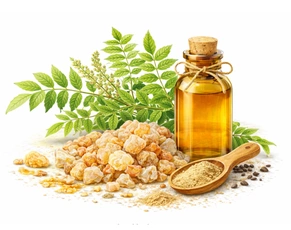
Powerful Ayurvedic Herbs for Arthritis: The Best Natural Joint Pain Medicine

Instead of your typical synthetic painkillers that cause stomach problems, our ayurvedic medicine for joint pain consists of time, tested herbs to target the Dryness (Vata) or the Inflammation (Ama) in your body. These powerful ayurvedic ingredients for arthritis do not just give the pain relief but also help to regenerate the joint tissue.

Shallaki Boswellia serrata Ayurvedic Herb for Joint Pain

Shallaki (Boswellia serrata)

It is called Indian Frankincense and is the world's most potent natural anti, inflammatory. It blocks the enzyme (5, LOX) that causes joint pain and swelling. At the same time, it also helps the blood to supply the nutrients to the damaged tissues.
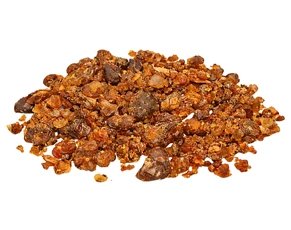
Professional studio shot of Kanchanar Guggulu resin in its raw, purified form, representing a potent Ayurvedic medicine for PCOD and natural remedies for PCOD.

Guggulu (Commiphora mukul)

A unique resin that "scrapes away" toxins (Ama) from the joints. We use specific formulations like Yograj Guggulu for Vata-type pain (OA) and Simhanad Guggulu for Ama-type pain (RA).
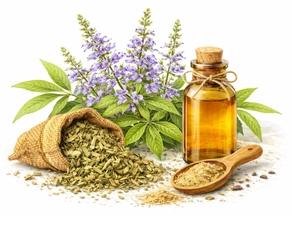
Nirgundi (Vitex negundo): Ayurvedic Herb for Joint Pain Relief

Nirgundi (Vitex negundo)

A very effective natural analgesic (pain reliever). The leaves of this plant are used to make a decoction which is poured over the joints that are in pain (Parisheka). Once the swollen joints come in contact with it, there is a quick decrease of the inflammation.
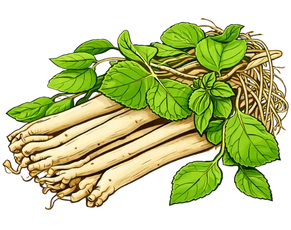
Illustration of fresh Ashwagandha roots and leaves, representing powerful Ayurvedic herbs and the best natural ED medication.

Ashwagandha(Withania somnifera)

It is a very powerful rejuvenator that works to make the muscles around the joints stronger. When the muscles are stronger they bear the bones and the bones are less stressed, hence it is a very important ayurvedic medicine for joint pain.
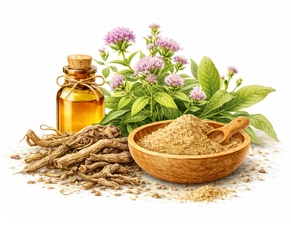
Rasna (Pluchea lanceolata): Ayurvedic Herb for Joint Pain Relief

Rasna

A wonderful herb for Vata disorders. It is a natural heating herb and helps to relieve the body pains and stiffness that are usually worse in the cold weather and with advancing age.
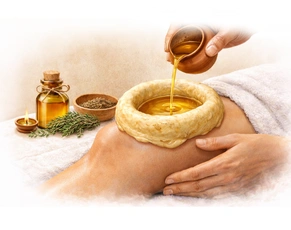
Janu Basti Ayurvedic Treatment for Knee Joint Pain

Janu Basti (External Therapy)

A specialized treatment where warm medicated oil is pooled on the knee joint for 30 minutes. This deeply penetrates the tissues, lubricating the joint and repairing worn-out cartilage directly.

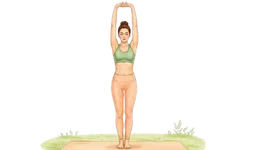
Yoga for Joint Pain Relief: Lubricate Your Joints Naturally

Many patients stop moving due to pain, but this only increases stiffness. Unlike high-impact running that wears down cartilage, our specialized yoga for joint pain focuses on gentle movements that pump synovial fluid into the joint space, ensuring smooth, pain-free motion.

Sukshma Vyayama(Joint Rotations)

Gentle joint rotations cause Vata to be released from its trap thereby giving relief from the morning stiffness very quickly.

Tadasana (Mountain Pose)

It adjusts the skeletal structure for better posture and prevents one side of the body from carrying more weight leading to painful knees.

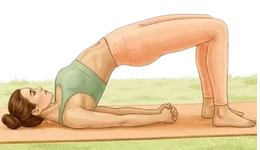
Setu Bandhasana (Bridge Pose)

Professional illustration of a person practicing Setu Bandhasana (Bridge Pose) as a foundational movement in Yoga & Pranayama: Natural Ways to Boost Fertility.
It helps glutes and lower back muscles to be strong that is why they do not take the bad effects of the knee joints.

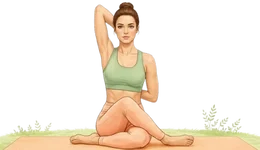
Gomukhasana (Cow Face Pose)

Great deep stretch that helps one to open up shoulders and hips that have become stiff due to lack of use thus giving you back the ability to move easily.

Ayurvedic Diet for Joint Pain: Foods that Heal vs. Harm

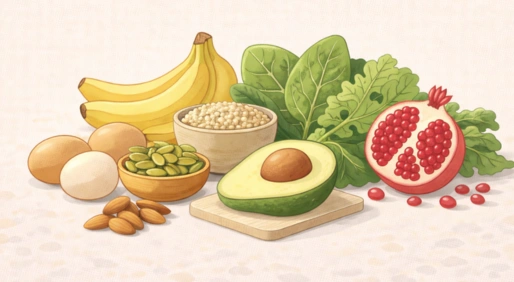
A variety of nutritious foods including bananas, spinach, pomegranate, avocado, and eggs representing the Ayurvedic diet for permanent recovery from erectile dysfunction.

The Joint-Friendly Diet

Healthy Fats

Consume ghee from cow and sesame oil to actively lubricate joints affected by osteoarthritis that are dry and stiff.

Spices

Add Turmeric and Ginger to your diet to get a natural anti, inflammatory and pain relief effect of your joints without any side effects.

Avoid Nightshades

If you have swelling, avoid tomatoes and potatoes as they will raise inflammatory rheumatoid arthritis.

Warm Water

Take a glass of warm water with your meals every day to dissolve the toxins (Ama) and balance the Vata dosha in the joints.

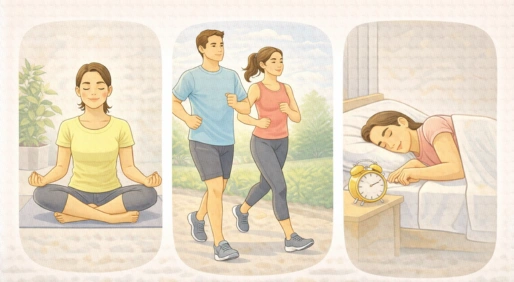
Lifestyle Changes

Oil Massage

Medicinal plant oil massage daily with warm Sesame Oil deeply feeds tissues therefore lessening pain and stiffness of the knee due to friction right away.

Sunlight

Expose yourself to the sun for 20 minutes in the morning to get the Vitamin D which will help in strengthening your bones as well as joints.

Keep Warm

Use knee covers when you are in an air, conditioned room or it is winter time to prevent cold, induced morning stiff joints and pain.

When to Consult a Doctor? Warning Signs of Joint Damage

Occasional aches are common, but persistent signs like heat or grinding noises indicate active tissue destruction. You should seek the Best Doctor for Arthritis Treatment Online immediately if you experience the following red flags.

  • Active Inflammation (Infection/Gout): If the joint is red, hot, and swollen, it indicates an acute infection or a Gout attack which needs to be treated without any delay.
  • Severe Morning Stiffness: If you have been experiencing stiffness for more than an hour after waking up, it is one of the symptoms of Rheumatoid Arthritis (Amavata).
  • Bone Friction: If you hear a grinding sound along with a stabbing pain, it means that your cartilage is likely to be very damaged (Osteoarthritis).
  • Overuse of Painkillers: If you are taking painkillers daily just to get through the day, you are covering the problem while the damage gets worse. Our ayurvedic treatment for joint pain is a much safer and long, lasting option.

Key Benefits of Ayurvedic Treatment for Joint Pain

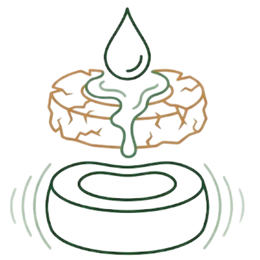
Line art illustration comparing a cracked, dry disc representing tissue distress to a smooth, hydrated disc being replenished by a drop of moisture, representing restored lubrication as one of the key benefits of Ayurvedic treatment for menopause.

Lubrication

Restores natural synovial fluid to lubricate dry joints and reduce painful friction.

Reduced Swelling

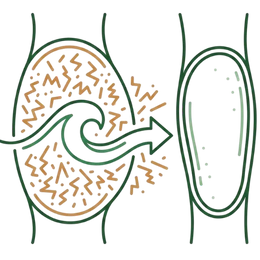
Actively flushes out trapped toxins and edema to reduce visible joint swelling.

Strengthened Muscles

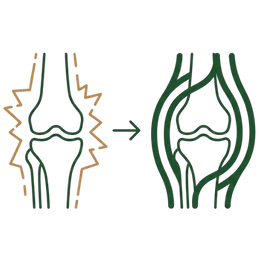
Strengthens supporting muscles to create a natural brace, protecting joints from damage.
Line art illustration of a shield with a checkmark and natural leaves, representing the no-side-effects key benefits of Ayurvedic treatment for premature ejaculation.

No Side Effects

Safe, non-habit forming herbal formulas perfect for long-term use unlike harmful painkillers.

Ayurveda vs. Joint Replacement Surgery: Which is Safer?

Feature Ayurvedic Treatment (AshwaKaya) Joint Replacement Surgery
Approach Regenerative & Lubricating Mechanical Replacement
Risks None / Safe Infection, Clots, Implant failure
Recovery Immediate mobility Months of physiotherapy
Cost Affordable Very Expensive
Sustainability Maintains natural bone Implant lasts 15-20 years
Pain Relief Gradual but holistic Immediate but surgical pain exists

Move Without Limits: Regain Your Freedom of Movement

Pain should not dictate your life. Whether you want to walk in the park, sit on the floor for a puja, or travel the world, healthy joints are your vehicle. At AshwaKaya, we help you oil the “rusty hinges” and clear deep-seated inflammation. Our joint pain ayurvedic treatment gives you back the freedom of movement you deserve, naturally.

Book an Appointment

Fill out this simple form and we’ll call you right back.

Why Choose AshwaKaya for Joint Pain Ayurvedic Treatment?

Two professional Ayurvedic doctors standing with cross-armed confidence, surrounded by symbols of holistic health and natural herbs, representing Why Choose AshwaKaya.
  • Diagnosis First: A clear, cut diagnosis distinguishing Osteoarthritis from Rheumatoid Arthritis is crucial for selecting the most effective treatment and preventing further exacerbation of inflammation.
  • Panchakarma Therapies: Targeted therapies such as Janu Basti and Patra Potli performed in conjunction with Ayurveda have shown a great potential in offering faster and profound relief from the symptoms of stiffness and joint pain.
  • Weight Management: Integrated weight loss plans reduce physical load on knees, treating the mechanical cause of pain.
  • Surgery Prevention: Our primary goal is regenerative care to save your natural joint and prevent replacement surgery.

Frequently Asked Questions About Ayurvedic Treatment for Joint Pain

A:Theoretically, if cartilage is worn out at one point (Bone, on, Bone), it cannot be regenerated entirely. But for mild to moderate cases (Grade 1, 3), we are able to regenerate soft tissues, increase the functional lubrication and prevent degeneration, thus providing the possibility of pain, free movement.

Gently walking on level surfaces is nice because it helps free up the joints. On the other hand, walking on hard concrete, hills, or treadmills should be off, limits for you if you are in severe pain. Swimming or riding a bike is more preferable as they are zero, impact activities.

There is no truth in it. The sound is simply nitrogen gas bubbles bursting inside the fluid. Yet, regularly broken knuckles may gradually reduce your hand strength.

A: Ayurveda can reduce pain and improve mobility so well in Osteoarthritis Grade 1, 2 and early Grade 3 cases that most of the time the need for surgery is eliminated. In Grade 4 (fused joints) cases, surgery may be the only solution, but Ayurveda also plays a major role in the recovery process of both pre, and post, op.