
Book an Appointment

Fill out this simple form and we’ll call you right back.

Ayurvedic Treatment for Diabetes: Manage Blood Sugar & Metabolic Balance Naturally

Diabetes is a metabolic disorder, not just a sugar problem. Our doctor-supervised diabetes treatment helps manage blood sugar naturally by improving insulin response, strengthening digestion (Agni), and protecting vital organs like the kidneys and eyes.

100% Confidential

Discreet Packaging

Safe Herbal Cure

Non-Habit Forming

Book Your Ayurvedic Consultation

This information is for general awareness only; for proper management of diabetes and personalized medical advice, contact our expert doctors online.

What is Diabetes Mellitus? Understanding the Metabolic Shift

Diabetes is a collective term for metabolic disorders with a main feature of high blood sugar over a long period (Hyperglycemia). It arises due to problems in insulin secretion and/or insulin action. Before knowledgeable diabetic treatment, knowing the type of the condition is necessary.

Types of Diabetes:

  • Type 1 Diabetes (Insulin, Dependent): This is an autoimmune disease characterized by the body attacking its own insulin, producing beta cells. Typically it starts in childhood, however, Ayurvedic treatment for Type 1 Diabetes mainly aims at body support and prevention of complications in conjunction with insulin.
  • Type 2 Diabetes (Non, Insulin Dependent): It is the predominant form (90, 95% of patients). In this case, even if the pancreas produces insulin, the cells are resistant to it (Insulin Resistance). This is the main point of our Type 2 Diabetes treatment which we carry out with an aim to reverse this resistance.
  • Pre-Diabetes: An important “Golden Window” state of blood sugar being elevated but not high enough for diabetes. If lifestyle changes are made at this point, it is often possible to completely get rid of the risk of diabetes.
  • Gestational Diabetes: The presence of elevated blood sugar in the course of pregnancy. Usually, the blood sugar returns to normal soon after delivery but the woman is at a higher lifetime risk of developing Type 2 diabetes.

Treatment of Diabetes in Ayurveda: Madhumeha & The 20 Pramehas

Ayurveda considers diabetes as “Madhumeha” (Sweet Urine), a condition which most commonly is regarded as the terminal stage of urinary disorders (Prameha). It further classifies it into 20 types based on Dosha dominance, mainly linking the Kapha aggravation and Vata involvement.

The Pathology (Samprapti):

  • Kapha Aggravation (Blockage): It all starts with excess Kapha caused by lack of physical activity and consumption of heavy foods. The excess of Kapha leads to blockages in the body’s channels.
  • Meda Dhatu Vitiation (Insulin Resistance): The overexcited Kapha in fat tissues (Meda) results in the production of a kind of glue that prevents Vata from entering the cells. This Avarana (Blockage) perfectly fits the present, day notion of Insulin Resistancethe key is there, but the lock is blocked by fat.
  • Vata Involvement (Tissue Wasting): In a case the disorder is not treated and it advances, Vata Dosha drags the vital essences (Ojas) towards the bladder. As a consequence, there occurs weight loss, extreme weakness, and tissue depletion (Dhatu Kshaya).

Root Causes of Diabetes (Hetu): Why Did This Happen?

Ayurveda pinpointed the causes of diabetes thousands of years ago, linking them directly to choices that disrupt metabolism (Agni).

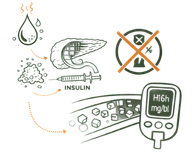
A medical infographic illustrating the Physical Causes (Kapha Blockage) Causes of Diabetes, showing the relationship between a sluggish pancreas, insulin resistance, and elevated blood sugar levels.
Physical Causes (Kapha Blockage):

Too much Kapha can clog your pancreatic channels and put a damper on insulin sensitivity. This metabolic resistance stops the cells from absorbing glucose, in other words, the symptoms of elevated blood sugar continue.
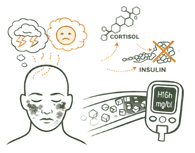
A medical infographic illustrating the Psychological Causes (Stress) Causes of Diabetes, showing how mental stress and cortisol production lead to insulin resistance and high blood sugar levels.
Psychological Causes (Stress):

Long, term stress raises the level of Cortisol that naturally opposes insulin at a very deep level. This imbalance of hormones is a typical cause that is hardly noticed yet very disruptive to our daily regulation.
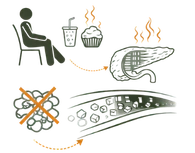
A medical infographic illustrating the Lifestyle Causes (Sedentary Habits) Causes of Diabetes, showing the impact of a lack of physical activity and high-sugar diets on pancreatic function and blood sugar levels.
Lifestyle Causes (Sedentary Habits):

The absence of movement (Asyasukham) along with an overload of sugar deteriorates the digestive fire. Consequently, sticky toxins (Ama) are formed which completely block cellular channels.
Symptoms of Diabetes: Recognizing the Silent Signals

Still, diabetes doesnt so much scream as whisper. “Purvarupa” (Prodromal Symptoms) are the signs that Ayurveda talks about which show up before the disease becomes fully established. Being aware of these initial alarm signals might prevent you from the full diagnosis.

Early Warning Signs (Purvarupa)
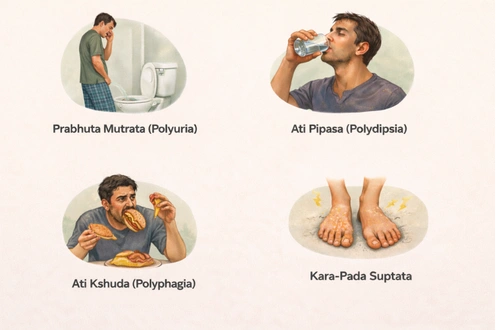
A detailed medical infographic illustrating the Early Warning Signs (Purvarupa) Causes of Diabetes, including Prabhuta Mutrata (Polyuria), Ati Pipasa (Polydipsia), Ati Kshuda (Polyphagia), and Kara-Pada Suptata (numbness in hands and feet).
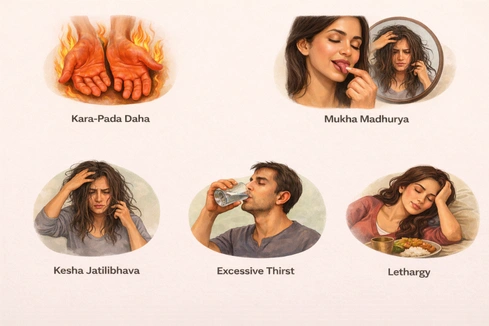
  • Kara-Pada Daha: Burning sensation in the palms and soles.
  • Mukha Madhurya: A persistent sweet taste in the mouth.
  • Kesha Jatilibhava: Matting of hair or sudden change in texture.
  • Lethargy: A feeling of heaviness in the body post-meals.
Established Symptoms (Rupa)
A medical infographic illustrating the Established Symptoms (Rupa) Causes of Diabetes, including Kara-Pada Daha (burning sensation in hands/feet), Mukha Madhurya (sweet taste in mouth), Kesha Jatilibhava (matting of hair), Excessive Thirst, and Lethargy.
  • Prabhuta Mutrata (Polyuria): Frequent and excessive urination, especially at night.
  • Ati Pipasa (Polydipsia): Unquenchable thirst due to fluid loss.
  • Ati Kshuda (Polyphagia): Excessive hunger because cells are "starving" for energy.
  • Kara-Pada Suptata: Numbness, tingling, or "ants crawling" sensation in hands/feet (Early Diabetic Neuropathy).

Myths vs. Facts About Ayurvedic Diabetes Treatment

✖ MYTH ✔ FACT
Eating sugar is the only cause Sugar is the main trigger, but lack of exercise and stress are also strong causes. You can get diabetes even if you don't have a sweet tooth.
Ayurveda can cure Type 1 Diabetes completely. Type 1 is an autoimmune disease. Ayurveda cannot "cure" (fully regenerate the organ), but it can help in lowering insulin requirement and avoiding complications. Watch out for 100% cure claims.
Bitter foods (Karela) alone will fix it. Bitter foods help lower sugar, but if you don't fix your metabolism (Agni) and do some physical activity, bitter herbs alone won't be a magic solution.
Honey and Jaggery are safe They are still sugars and will cause blood sugar to rise. They should be avoided or used very sparingly depending on the severity.

Risks & Complications: The Silent Damage of High Sugar

Ignoring high blood sugar symptoms or poorly managing them is a direct route to systemic failure. Excess sugar behaves like sandpaper against the inner walls of blood vessels, which causes,

A medical illustration showing nerve damage caused by high blood sugar, featuring icons for diabetic foot ulcers and amputation, representing the Diabetic Neuropathy Risks & Complications: The Silent Damage of High Sugar.
Diabetic Neuropathy

The nerves are affected resulting in sensations of pain or tingling, loss of sensation, mainly in the feet. It can be a cause of unnoticed injuries leading to amputation.
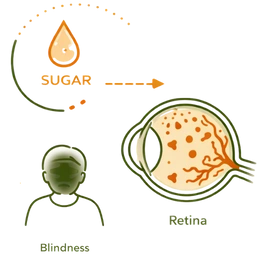
A medical illustration showing damage to the retina caused by high blood sugar, featuring icons for vision loss and blindness, representing the Diabetic Retinopathy Risks & Complications: The Silent Damage of High Sugar.
Diabetic Retinopathy

The cause is the greater blood vessels in the retina. These blood vessels become leaky and bleed resulting in blindness.
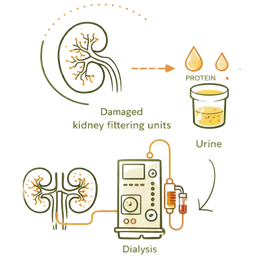
A medical illustration showing damaged kidney filtering units and protein leakage in urine, transitioning to a dialysis machine, representing the Diabetic Nephropathy Risks & Complications: The Silent Damage of High Sugar.
Diabetic Nephropathy

The damage is done to the filtering units of the kidneys that causes protein to leak in urine. In the end, the patients are on dialysis.
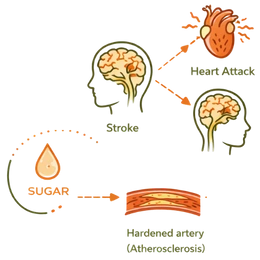
A medical infographic illustrating how high sugar levels lead to hardened arteries (Atherosclerosis), increasing Cardiovascular Disease Risks & Complications: The Silent Damage of High Sugar, including heart attack and stroke.
Cardiovascular Disease

Compared to non, diabetics, diabetics are 2, 4 times more likely to have heart attacks and strokes because their arteries have become hardened (Atherosclerosis).
Ayurvedic Medicines For Diabetes: Nature’s Blood Sugar Regulators

Our Ayurvedic treatment for blood sugar utilizes Tikta (Bitter) and Kashaya (Astringent) herbs to reduce Kapha, clear blockages, and stimulate the pancreas.

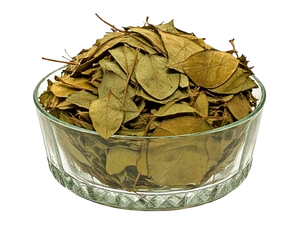
A glass bowl filled with dried Gudmar (Gymnema sylvestre) leaves, showcasing a premier Ayurvedic herb medicine for diabetes known as the "Sugar Destroyer."

Gudmar (Gymnema sylvestre)

Known as "Sugar Destroyer" is easily the most appropriate name for Gudmar. Firstly it blocks sugar receptors on your tongue thus reducing cravings and secondly, it also blocks sugar receptors in intestines thereby reducing the absorption. Additionally it helps in regenerating pancreatic beta, cells.
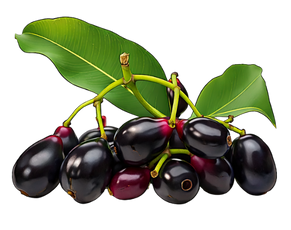
A high-quality botanical illustration of Jamun (Eugenia jambolana) featuring deep purple fruits and green leaves, showcasing a core ingredient in Ayurvedic Herb Medicines For Diabetes.

Jamun (Eugenia jambolana)

The seeds hold a substance called jamboline, which stops starch being converted into sugar, thus keeping blood glucose stable after meals.
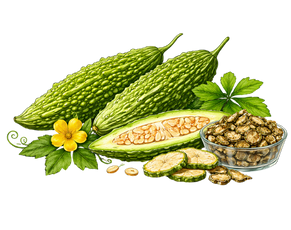
A high-quality botanical illustration of Karela (Bitter Gourd) featuring whole bumpy green fruits, a longitudinal slice, and dried slices in a glass bowl, showcasing a staple in Ayurvedic Herb Medicines For Diabetes.

Karela (Bitter Gourd / Momordica charantia)

Dowry with plant, insulin polypeptide, p which is insulin, mimicking that naturally reduces blood glucose levels.
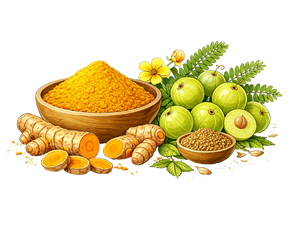
A botanical illustration of Nisha-Amalaki, featuring vibrant yellow Turmeric (Haridra) roots and powder alongside fresh green Amla (Amalaki) fruits, representing a powerful combination in Ayurvedic Herb Medicines For Diabetes.

Nisha-Amalaki (Turmeric + Amla)

This combination is the ideal Ayurvedic medicine for the treatment of diabetes complications. Turmeric is an anti, inflammatory agent, whereas Amla is a powerful antioxidant that shields the eyes and kidneys from harm.
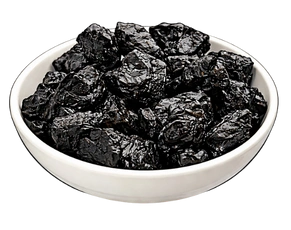
Illustration of dark Shilajit resin dripping from mountain rocks, representing powerful Ayurvedic herbs and the best natural ED medication.

Shilajit (Asphaltum punjabianum)

This is a must for not allowing the weakness and tissue loss (Ojas Kshaya) which are symptoms of the chronically diabetic to take place. In addition to that, it works as a rejuvenator, enhancing one's physical strength.
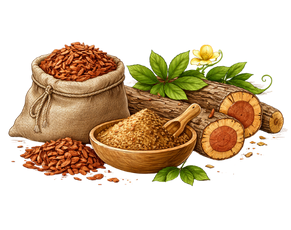
A botanical illustration showing Vijaysar (Pterocarpus marsupium) logs, leaves, and ground powder in a bowl, a cornerstone of Ayurvedic Herb Medicines For Diabetes.

Vijaysar (Indian Kino Tree)

This is a tried and tested remedy in which the water stored overnight in a Vijaysar wood tumbler turns reddish, brown and thus helps to regulate blood sugar and reduce obesity.
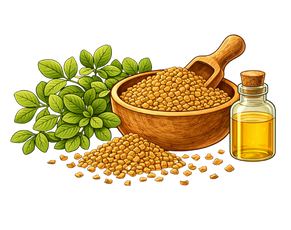
A high-quality botanical illustration of Methi (Fenugreek) featuring green leaves and a wooden bowl filled with golden-brown seeds, highlighting a vital ingredient in Ayurvedic Herb Medicines For Diabetes.

Methi (Fenugreek)

Rich in soluble fiber and galactomannan, Methi seeds slow down the digestion and absorption of carbohydrates. Soaking them overnight and chewing them in the morning improves insulin sensitivity.

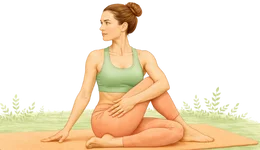
Yoga for Diabetes Control: Supporting Pancreatic Health

Physical movement is non-negotiable for diabetes management. Specific yoga poses massage internal organs, stimulating the pancreas and liver function.

Mandukasana (Frog Pose)

A professional illustration of a practitioner performing Mandukasana (Frog Pose) on a yoga mat, a highly recommended posture in Yoga for Diabetes Control for stimulating pancreatic function.
The best and powerful asana for diabetes. Fist pressing the abdomen can help the pancreas directly by the pressing and thus the insulin secretion is stimulated.

Ardha Matsyendrasana (Sitting Half Spinal Twist)

A side-view demonstration of a person performing Ardha Matsyendrasana (Half Lord of the Fishes Pose), a seated spinal twist used in Yoga for GERD Ayurvedic treatment to stimulate digestive organs.
A twist basically compresses the abdominal organs as if they were a sponge, so they are good for detoxification and also stimulation of the pancreas is a plus.

Surya Namaskar (Sun Salutations)

Professional illustration of a person performing a sequence of Surya Namaskar (Sun Salutations) to energize the entire body, a comprehensive practice in Yoga for Low Libido.

Boosts your overall metabolic rate and also increases your insulin sensitivity. If you do 12 rounds a day, it would be the same as doing a vigorous cardio.

Paschimottanasana (Seated Forward Bend)

Illustration of a woman practicing Paschimottanasana (Seated Forward Bend) to represent yoga & pranayama to support ED treatment naturally.
The wrapping around the belly thus the digestion help and the pancreas functions get regulated.

Ayurvedic Diet for Diabetes (Lekhana Ahar) & Lifestyle

Diet is the pillar of diabetes management. It’s not just about stopping sugar; it’s about choosing the right grains and timing your meals.

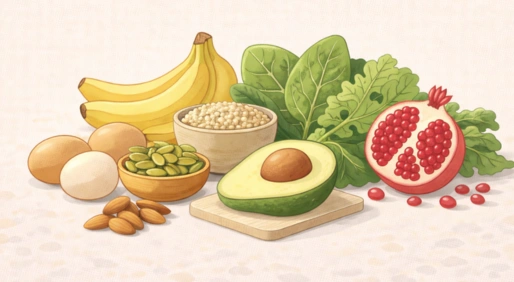
A variety of nutritious foods including bananas, spinach, pomegranate, avocado, and eggs representing the Ayurvedic diet for permanent recovery from erectile dysfunction.

The Lekhana (Scraping) Diet

Hero Grains

Replace wheat and rice with Barley. In fact, Barley is dry cold and heavy, thus, it is the best grain to scrape excess fat and Kapha.

Vegetables

Focus mostly on bitter and astringent vegetables, e.g., Karela, Lauki, Palak, Methi etc.

Fruits

Use low Glycemic Index fruits like Jamun, Guava and Papaya; Avoid high Glycemic Index fruits like Mango, Banana and Chikoo.

Timing

Make sure to have your dinner early, preferably 7 PM. Having dinner late is one of the reasons for high fasting sugar the next morning.

Lifestyle Changes

Shatapavali

It is the method of taking 100 steps (or 10, 15 mins) after each meal. It have a measurable effect on lowering the post, meal sugar spikes.

No Day Sleep

Do not sleep in the afternoon at all as it immediately increases Kapha and blood sugar levels.

Foot Care

Clean and dry your feet every day. To prevent infections and neuropathy complications, apply Neem oil.

When to Consult an Online Ayurvedic Doctor for Diabetes?

Diabetes treatment requires prompt action. If you see these serious clinical symptoms, then you really need to stop solely relying on home remedies and get professional Ayurvedic treatment for diabetes.

  • High Blood Sugar: A constant fasting sugar of more than 126 mg/dL is a sign that you need professional diabetes treatment right away.
  • High HbA1c: When the HbA1c level is above 6.5%, it indicates bad control which requires a planned medical treatment.
  • Diabetic Foot: Non, healing wounds or ulcers on the foot necessitate attention from a diabetic specialist.
  • Sudden Vision Changes : Sudden or recent episodes of blurry vision is a warning sign for the development of Diabetic Retinopathy, requiring immediate diabetes care.
  • Treatment for Sudden Hypoglycaemia : Symptoms of dizziness, sweating or confusion are classic signs of extremely low blood sugar, requiring immediate stabilization.
  • Treatment for Recurrent Infections : Recurrent urinary tract infections, and/or persistent itching are signs of high blood sugars.

Key Benefits of Ayurvedic Treatment for Diabetes

Diabetes management is more than just focusing on a number; it is also about securing your future. With the help of our Ayurvedic diabetes treatment, we not only reverse the metabolic damage but also safeguard the vital organs while still managing the blood sugar levels.

An icon-style illustration showing the efficient processing of sugar into energy cells, representing the Better Insulin Sensitivity Benefits of Ayurvedic Treatment for Diabetes.

Better Insulin Sensitivity

Help your body cells to “open the door” and accept sugar more efficiently, thereby naturally lessening the symptoms of high blood sugar and tiredness.

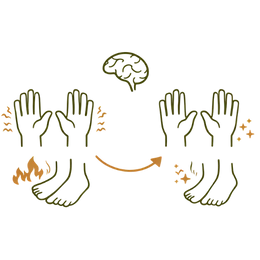
An icon-style illustration showing the transition from burning and tingling sensations in the hands and feet to a healthy, revitalized nervous system, representing the Neuro-Protection and Better Insulin Sensitivity Benefits of Ayurvedic Treatment for Diabetes.

Neuro-Protection

Diabetic neuropathy is one of the conditions that we treat specifically. Our drug diminishes the tingling, burning sensation, and numbness of hands and feet, thus protecting the nerves.
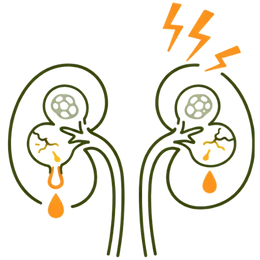
An icon-style illustration showing damaged kidneys with structural cracks and protein leakage, representing the need for the Better Insulin Sensitivity Benefits of Ayurvedic Treatment for Diabetes to prevent renal failure.

Kidney Health (Nephro, Protection

Sugar level in the blood that remains high for a long time leads to the destruction of the kidneys. Our method of treatment is aimed at minimizing the risk of diabetic nephropathy, and at the same time, it helps in preventing protein leakage via urine.
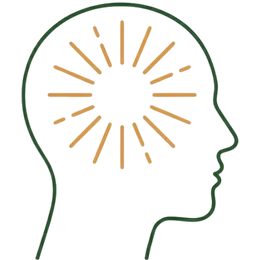
An icon-style illustration of a human head with a glowing sun symbol inside the brain, representing the mental clarity and stable energy benefits of Ayurvedic treatment for diabetes.

Stable Energy

Say goodbye to the afternoon satiation. When the level of glucose is controlled naturally, we avoid the tiredness that follows sugar spikes, thus providing you with stable and long, lasting vigour.

Ayurveda vs. Conventional Medicine Which Diabetes Treatment is Right for You?

Most treatments manage the symptom (sugar level), but we treat the system. See why our Ayurvedic treatment to reverse Diabetes (remission) is the preferred choice for long-term health.

Feature Ayurvedic Treatment (AshwaKaya) Allopathic Medicine (Metformin/Insulin)
Mechanism Repairs metabolism, regenerates Beta-cells, & clears blockages Lowers glucose production, increases sensitivity, or injects hormone
Side Effects Improves digestion, immunity & organ health Gastric upset, Vitamin B12 deficiency, Weight gain, Kidney strain
Long Term Protects organs (Kidney/Eye/Nerves) Doesn't inherently stop organ damage progression
Hypoglycemia Low risk (Modulates sugar naturally) High risk (Can drop sugar too low if meal is skipped)
Goal Reversal / Holistic Management & Vitality Maintenance of numerical levels

Managing the Sweet Trap: Live a Full Life Without the Sugar

Diabetes is all about the discipline that could be a journey. However, it need not be a journey of deprivation. By fixing your metabolism and picking the right ‘fuel, ‘ you can lead a full, sweet life.
At AshwaKaya, we are focused on more than just lowering the number on your lab report. We want to help you maintain your vitality (Ojas) for many years to come.

Book an Appointment

Fill out this simple form and we’ll call you right back.

Why Choose AshwaKaya for Your Diabetes Treatment?

We understand that diabetes affects everyone differently. Our approach is not a generic “sugar-free” diet; it is a medical protocol customized to your body type.

Two professional Ayurvedic doctors standing with cross-armed confidence, surrounded by symbols of holistic health and natural herbs, representing Why Choose AshwaKaya.
  • Holistic Monitoring: We don't just look at daily sugar. Our Ayurvedic doctors track your HbA1c, Lipid Profile, and Kidney Function to ensure total health recovery.
  • Reversal Focus: For pre-diabetics and early Type 2 Diabetes treatment cases (diagnosed < 5 years), we explicitly aim for remission, helping you reduce or stop medication completely.
  • Dietary Integration: We offer mouth, watering, diabetic friendly recipes with which you will not feel deprived of taste while keeping your blood sugar under control.
  • Dietary Integration: We provide delicious, diabetic-friendly recipes so you don't feel deprived of taste.

Frequently Asked Questions About Ayurvedic Diabetes Treatment

Yes, but only if the disease is new. Usually, within the first 5 years after diagnosis, major reversal (remission) can be achieved through strict Type 2 Diabetes treatment protocols using diet and herbs.In very old cases, Ayurveda stabilizes the condition and keeps the patient safe from complications that could be fatal from the disease.

Yes, with caution. The right diabetes diet plan includes fruits with a Low Glycemic Index like Guava, Jamun, Pear, and Berries. Totally stay away from fruit juices because they have no fiber and sugar level goes up fastalways consume the whole fruit.

Gudmar (Gymnema sylvestre) is a strong blood sugar control medicine in the Indian system of medicine (Ayurveda). It has gymnemic acids that imitate the sugar molecules hence they block sugar absorption through intestines. From a scientific perspective, it supports the regeneration of insulin, producing beta cells in the pancreas.

No. It is a dangerous myth. Although Jaggery contains minerals, it is still a simple sugar that increases the level of blood sugar almost as fast as white sugar does. Diabetes treatment that works should involve not just Jaggery but Honey as well so that the levels can be kept stable.

Never stop insulin on your own. Insulin is life-saving. As our Ayurvedic Doctor for Diabetic care improves your natural insulin sensitivity, your doctor will observe your readings and slowly reduce your dosage over time—never abruptly.

Refined white rice should be discarded as it has a very high glycemic index. But a small amount of unpolished Red or Brown Rice is permissible if you are physically active. Also, when rice is combined with a large quantity of vegetables, the glycemic load of the meal as a whole is significantly reduced.

Yes, definitely. It is through Cortisol, a hormone, that stress leads to your liver releasing glucose from stored glycogen into your blood for energy. Long, term stress results in symptoms of high blood sugar levels all the time, even if the diet is perfect.